Nomad Life
Coliving vs Airbnb vs Hostel: Is Coliving better than Airbnb and Hostel?
Comparing coliving, Airbnb, and hostels for remote workers and digital nomads. Community, WiFi, privacy, flexibility, here's how they stack up.
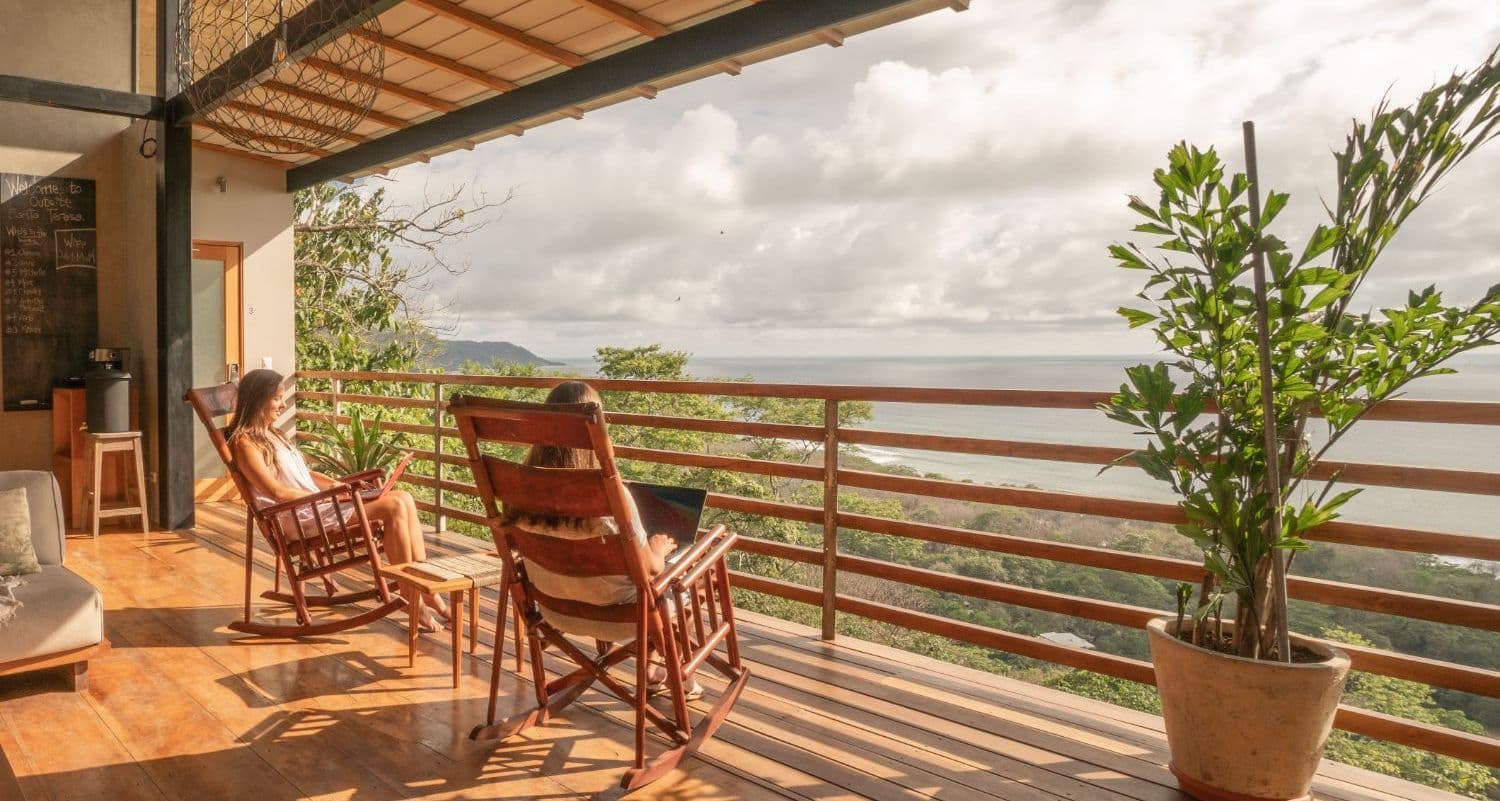
Choosing where to stay used to be simple. You picked a hotel, booked an Airbnb, or grabbed a hostel bed. But when your work travels with you, the stakes are different, accommodation isn't just a place to crash. It's your office, your social life, and the thing that can make or break a month in a new city.
Pick wrong and you spend three weeks fighting a patchy wifi connection, wondering why you bothered leaving home.
The three options most remote workers end up choosing between: coliving, Airbnb, and hostels, look similar on the surface. They all promise "community" or "flexibility" or "the local experience." But they deliver very different things in practice. The real questions to ask before you book anything: What is the difference between coliving and airbnb and a hostel? Does this place actually support the life you're trying to live?
Here's how they stack up.
Ask anyone who's done a solo month-long work trip and they'll tell you: isolation is the thing that sneaks up on you. You're productive, the city is beautiful, the food is good — and by week two, you haven't had a real conversation in days. We know it, it’s not easy to make friends traveling over 30’.
Airbnb doesn't solve this. Some hosts are warm and connected; many aren't. There's no infrastructure for meeting people, and no guarantee the person in the next room wants to talk. You might get lucky. You probably won't.
Hostels do have community — and real community, to be fair. Common rooms, bar nights, group tours, organized pub crawls. If you're open to it, you'll meet people fast. The catch is that the energy skews young and the activities often run late. If you're 30-plus with a 9am call, spending your evenings doing shots with 22-year-olds isn't exactly the vibe — and the morning after isn't great for deep work either.
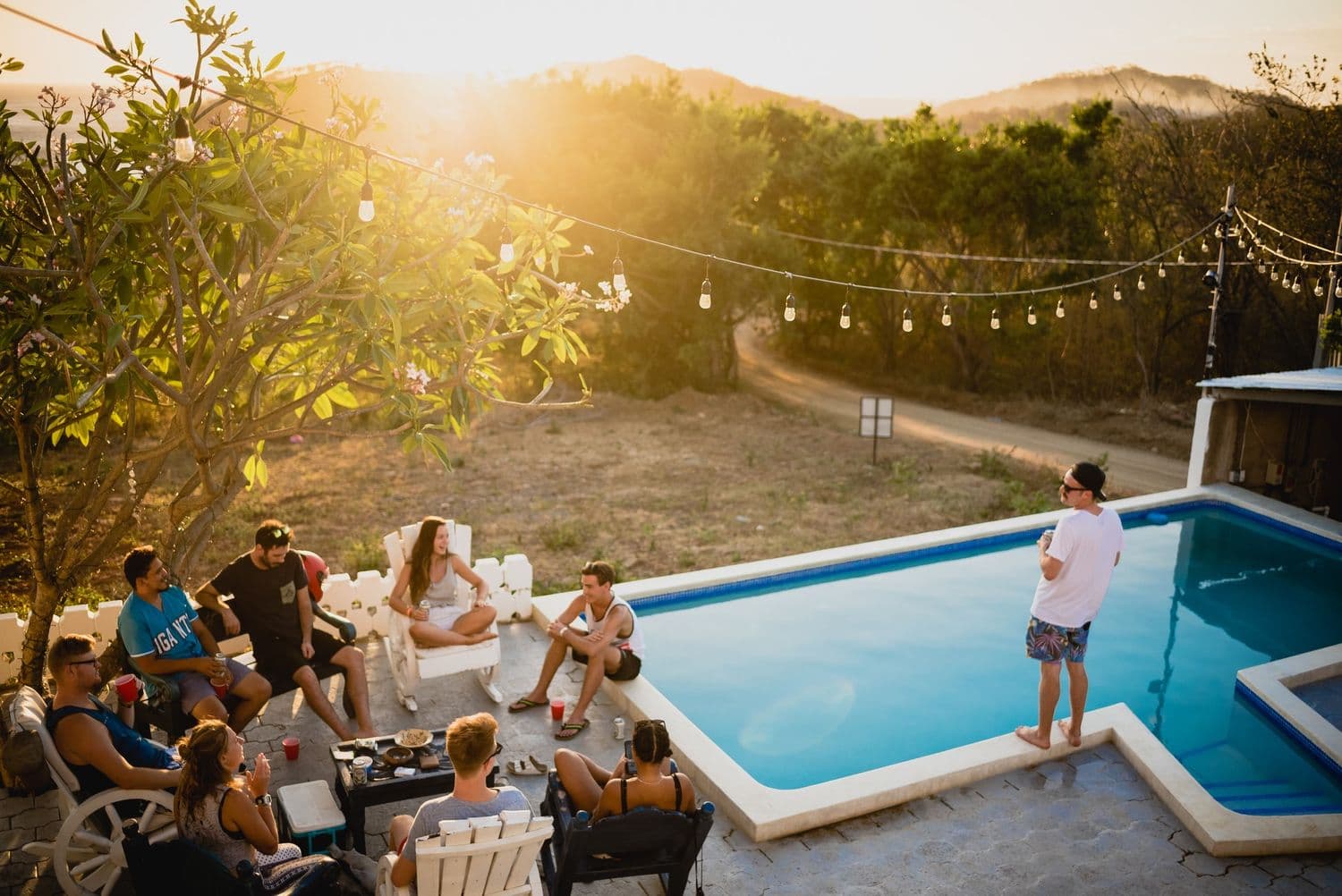
At Outsite, community isn't accidental, it’s basically a coliving community for professionals. Every location has an active WhatsApp group where guests connect before they even arrive, sharing dinner plans, surf sessions, coworking spots. There's a community manager at each property who makes introductions, shares local tips, and organizes events — think shared breakfasts, dinners, cultural outings, day trips. There's still a social scene, but it's built around people who also have somewhere to be in the morning.
You can still have a quiet day when you need one. But the option to connect is always there, and it's structured, not left to chance.
"Fast WiFi" is the most misleading phrase in travel accommodation. The listing says fast wifi. The photos show a nice desk. Then you arrive, open your laptop, join a Zoom call, and freeze for everyone in the meeting.
The problem isn't that Airbnb hosts are dishonest — it's that they're not remote workers. A WiFi speed that's fine for streaming Netflix is not the same thing as a stable connection for a six-person video call.
Now, is a hostel good for remote workers? Hostels are generally worse. They're built for socializing, not productivity. Shared networks with dozens of users, common areas that aren't designed for focus, and a desk that's really just the corner of a kitchen table.
Outsite is basically a guaranteed fast WiFi travel accommodation,and this is non-negotiable, it's the core infrastructure. t's the core infrastructure. Every property has a dedicated coworking space, and every room has a proper desk and chair. The infrastructure is built for people who actually need to work, because that's who stays there.
One of the biggest practical differences between these three options comes down to your bedroom.
Hostels are affordable for a reason. The trade-off is a shared dorm — strangers, bunk beds, someone's alarm at 6am. Private rooms exist but they cost significantly more.
Airbnb gives you privacy, whether that's a private room in someone's home or an entire apartment. That's a genuine advantage if you want to be completely alone.
Outsite sits in between — and it's a better version of between. Private rooms, most with en-suite bathrooms, inside a shared home. You get the personal space to sleep, focus, and recharge — without the isolation of an Airbnb where days can pass without a real human interaction. You also get to walk into a kitchen in the morning where there's usually someone making coffee.
That balance — private when you need it, social when you want it — is harder to engineer than it sounds.
Remote work is unpredictable and plans change. The good news: two of the three options here handle that reasonably well.
Outsite offers up to 72 hours free cancellation, which is a meaningful safety net when your schedule is moving around.
Airbnb no cancellation policy problems are everywhere, as cancellations are set by individual hosts, and strict policies are common, especially for popular listings in peak season. Book a week in advance and change your mind, and you could lose a significant portion of what you paid.
Hostels are generally the most flexible — short minimum stays, easy cancellations, and low financial risk if your plans shift last minute. That's a genuine advantage, and worth factoring in if your schedule is genuinely uncertain.
All three options can save you money on food, and that's worth saying clearly. Hostels almost always have a shared kitchen, even if the fridge is perpetually overstuffed and someone has claimed an entire shelf for their hot sauce collection. Most Airbnbs have a kitchen too, though how well-equipped it is depends entirely on the host. A full setup in one listing, a single saucepan and a kettle in the next.
The advantage at Outsite is consistency. A fully equipped shared kitchen — properly stocked, properly maintained — means you can actually cook daily if you want to. Breakfast, lunch, the occasional dinner. Over a week or a month, that's real money saved, without the guesswork.
Another interesting saving is Outsite’s coliving Membership discounts. Members get up to 35% off stays, plus access to exclusive deals every month. The more you travel with Outsite, the better the rates get — a very different model from Airbnb, where there's no loyalty benefit, and from hostels, where the savings ceiling is mostly just the low nightly rate.
Not everyone. And that's the point.
Outsite is built for remote workers and professionals who want more from their accommodation than a place to sleep. People who care about having a reliable workspace, who want to meet interesting humans without manufacturing the opportunity themselves. People who've done enough Airbnb trips to know what's usually missing, and enough hostel nights to know they've moved on from that chapter.
The typical Outsite guest i's a specific kind of person — and if that sounds like you, the match is usually immediate.
The question was never really coliving vs. Airbnb vs. hostel. It was: what kind of trip do you actually want to have?
Airbnb is great for families, short trips, or people who want complete privacy. Hostels work for budget backpackers comfortable with shared dorms and a younger crowd. But for remote workers who want reliable wifi, a real workspace, a private room, and a community of people actually worth knowing — coliving, and Outsite specifically, is in a different category.
The question was never really: “Why choose a coliving over a hostel or an Airbnb?”, it was always: “What kind of trip do you actually want to have?”.
Ready to travel differently? Become an Outsite Member and get up to 35% off your first stay — or explore our locations and find your next base.



Coliving spaces, community, and perks designed for remote workers and creatives.
Product
Company
Social


Keep up with location openings,community events, and other news.
Download the Outsite App Now


© 2026 Outsite Co. All rights reserved.