Location
Digital Nomad Guide to Santa Teresa, Costa Rica
The ultimate digital nomad guide to Santa Teresa. Planning to work remotely from Santa Teresa, Costa Rica? Here's where to stay, how to get there, wifi speeds, coworking spots, cost of living, and the digital nomad visa rules for 2026.
Considering a trip to Santa Teresa? Here's the full picture for remote workers: where to stay, how to actually get there, whether you need a visa, what it costs to live and work here, plus the best cafes, coworking spots, and things to do.
Working remotely from Costa Rica is increasingly popular, thanks to a US-friendly time zone, reliable weather, and a well-established digital nomad visa. Santa Teresa specifically draws people for its surf, wellness scene, and slower pace - the tradeoff is that it's harder to reach than nomad hubs like Tamarindo or Jaco, and wifi/power reliability varies more by property.
Santa Teresa is a beach town on the Pacific side of Costa Rica, at the tip of the Nicoya Peninsula. Most accommodation sits along the beach road, stretching south from Carmen, through Santa Teresa, and into Hermosa/Cóbano. Outsite has two spaces here:
Outsite Santa Teresa – Playa: Right on the beach road, 2 minutes from Playa Santa Teresa. This is the more social of the two properties: an open-air coworking space, a pool surrounded by palms, a communal kitchen, and 200 Mbps wifi. Rooms range from private ensuites to full one- and two-bedroom apartments (10 private rooms + 4 apartments), from $78.60/night. Rated 4.8/5 across 188 reviews - guests consistently mention the community and the location.
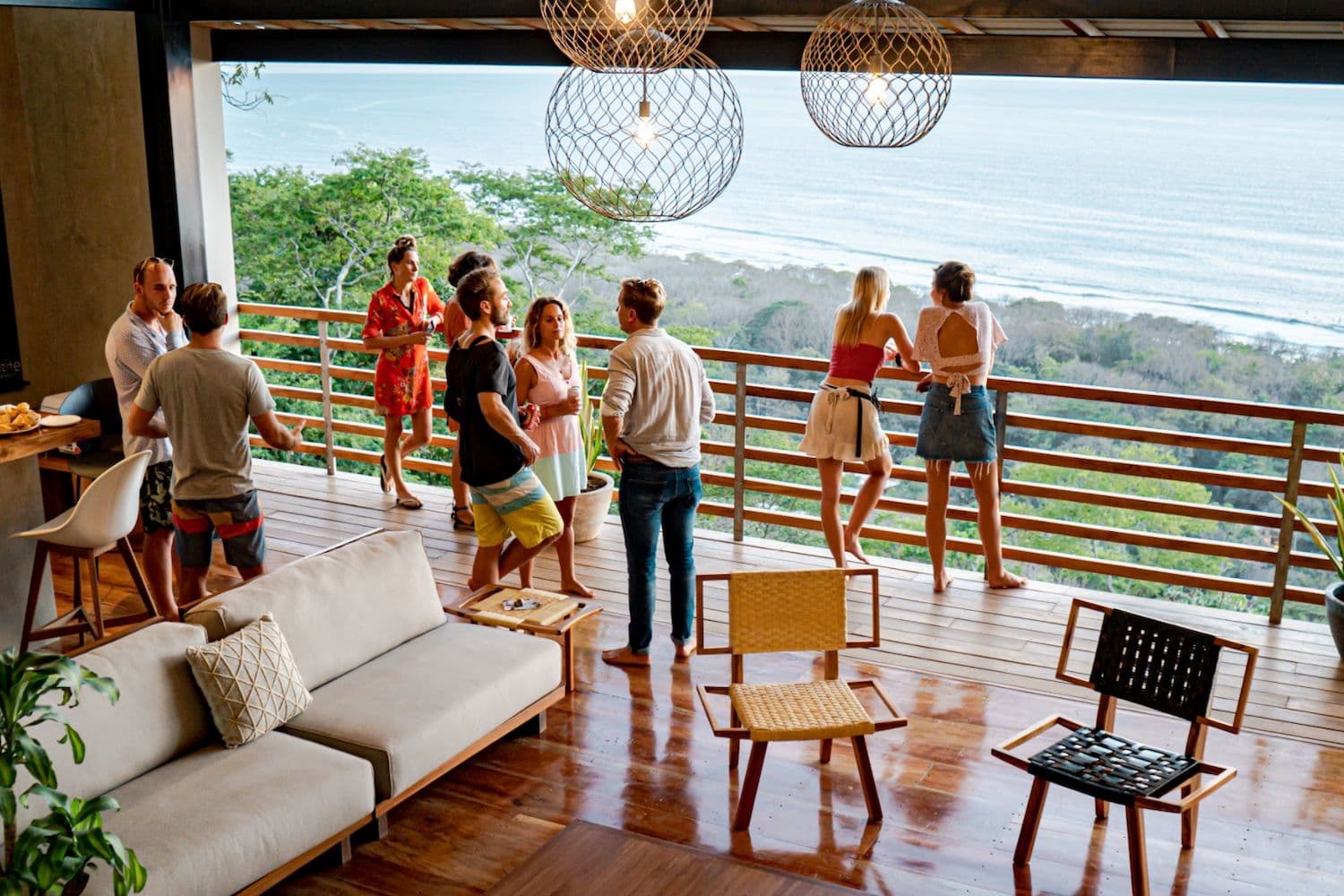
Outsite Santa Teresa – Maramar: A jungle villa on a hillside above town, with ocean-view terraces and 40 Mbps wifi. 8 private rooms, from $61.80/night. This is the quieter, more scenic option - sunsets from the shared living area are the standout feature - but it sits at the top of a genuinely steep hill, an ATV or a car is recommended. Rated 4.5/5 across 148 reviews.
If you want energy, community, and easy beach access, book Playa. If you want quiet, views, and don't mind (or want) an ATV, book Maramar.
Both properties give Outsite Members 15% off stays of 7+ nights, 30% off 28+ nights, and 35% off 60+ nights.
Playa Santa Teresa
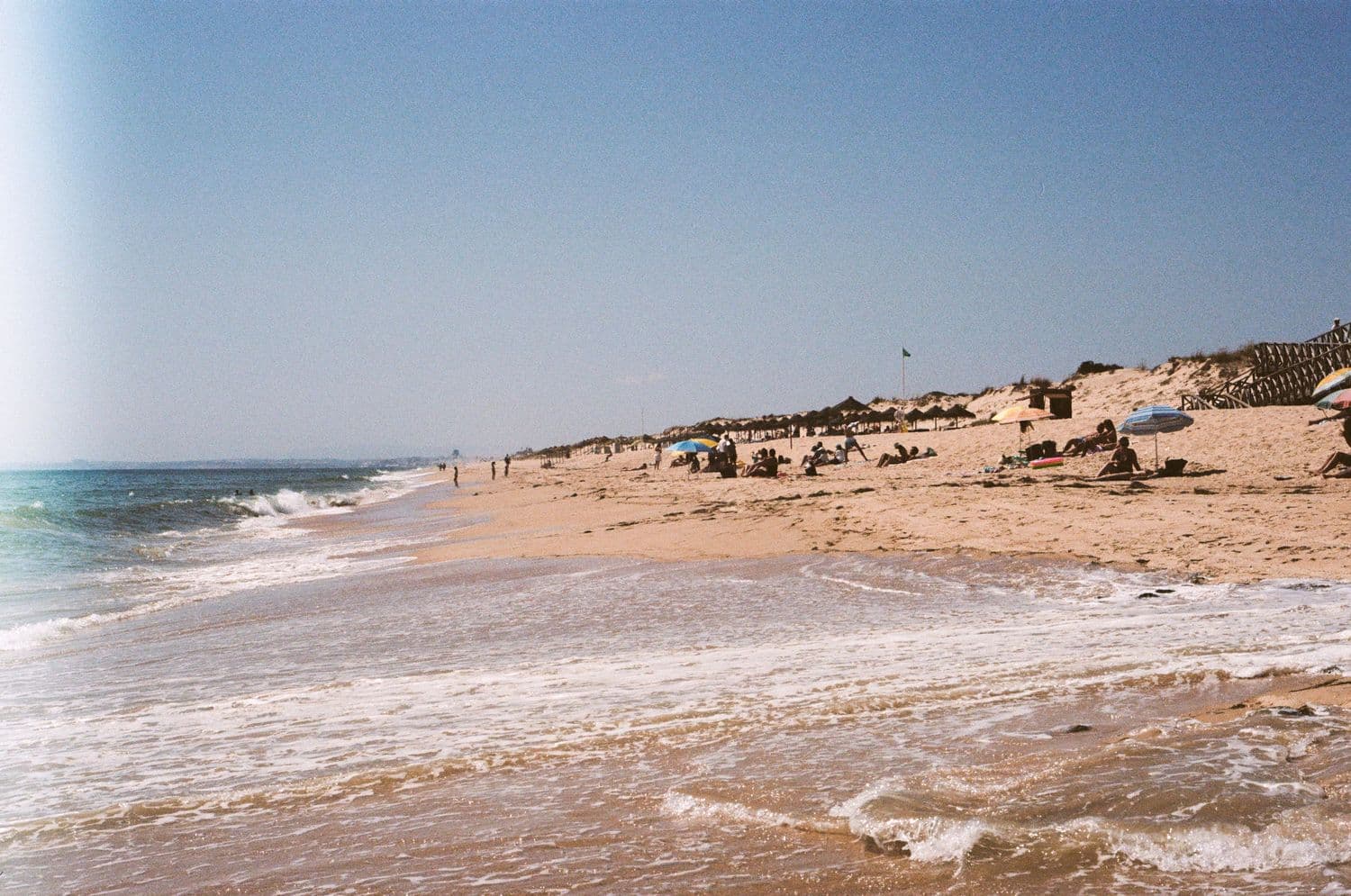
This is the closest beach to Outsite. It's a vast expanse of white sand, fringed by lush bushland. You'll find beach bars, surf schools and plenty of locals laying down their towels nearby. It's only recommended for swimming if you're a competent swimmer.
Playa Carmen
Playa Carmen is another popular surf beach, it's a 20 minute walk south of Playa Santa Teresa. Similarly, swimming is not recommended here.
Playa Hermosa
This is a more remote beach north of Santa Teresa, and it's the best beach in Santa Teresa for swimming. The smaller swells here also lend themselves well to paddle boarding.
Need more info? Check out this local guide to the beaches in Santa Teresa.
This is the part that trips people up, so it's worth spelling out clearly. Santa Teresa sits on the Nicoya Peninsula, separated from the mainland by the Gulf of Nicoya - there's no direct highway route from San José.
Option 1: Ferry via Puntarenas (cheapest, slowest, ~5 hours from SJO): Fly into San José (SJO), then travel to Puntarenas, take the car ferry across to Paquera (ferries run roughly every 2-3 hours between 4am and 10pm), then drive about an hour from Paquera to Santa Teresa/Playa Carmen.
- Public bus: departs San José's Terminal TIG around 6am, includes the ferry crossing, continues on to Paquera and the peninsula.
- Shared shuttle: roughly $50/person, door-to-door including ferry fees.
- Private transfer: door-to-door for up to 4 people, roughly $270–330 total.
Option 2: Domestic flight (fastest, priciest): Fly SJO to Tambor (TMU) or to Tobías Bolaños (near San José) then a puddle-jumper, landing about 30–50 minutes' drive from Santa Teresa by taxi, shuttle, or car/ATV rental. This is the route Outsite recommends if you value your time — "30 mins from Cobano Airport" for the Playa property, "50 mins from Tambor" for Maramar.
Either way, budget the better part of a travel day to get here. It's a meaningful part of why Santa Teresa feels less "discovered" than other nomad towns on the Pacific coast.
If you're planning to stay longer than a standard 90-day tourist stamp, Costa Rica has a dedicated digital nomad visa ("Rentista" category migrants working remotely). As of 2026, the requirements are:
- Minimum income: $3,000/month for an individual, $4,000/month for a family
- Health insurance: Coverage for your full stay, minimum $50,000, from either an international provider or a Costa Rican-regulated insurer (dependents must be covered too)
- Application fee: $100 (or colones equivalent)
- Where to apply: Online via Costa Rica's official TramiteYa immigration platform
- Processing time: Roughly 15 working days
- Duration: Valid for up to 1 year, renewable for a second year
- Tax benefit: Digital nomad visa holders are exempt from Costa Rican income tax on foreign-earned income, and can open a local bank account and use their home country's driver's license
This is worth its own section because it directly affects whether someone can justify a multi-month stay at Outsite versus just a two-week trip. Link out to the official government resource (Visit Costa Rica – Digital Nomads) rather than a third party, since requirements can shift.
Santa Teresa is one of the pricier nomad destinations in Costa Rica — closer to a small US beach town than to inland cities like San José. Rough monthly numbers for a single remote worker:
- Food: $10–20/day eating out; $150–200/month on groceries if cooking regularly
- Coworking/internet: Day passes $10–20; monthly coworking memberships $150–300 (Outsite stays include workspace and wifi in the nightly/monthly rate, which is worth factoring in versus paying for lodging + coworking separately)
- All-in monthly budget: Many expats report living comfortably on $2,000–3,000/month; on the higher end, all-in costs (rent, food, coworking, insurance, leisure) can reach $3,000-4,300/month depending on lifestyle and season
Prices spike during high season (December–April) when both flights and accommodation get more competitive.
There is a digital nomad community in Santa Teresa, but it's certainly quieter than Jaco or Puerto Viejo. There is no established coworking space there, which deters many nomads from making the trip. When you become a Member of Outsite, you'll have access to a local WhatsApp group in Santa Teresa. You can also use Nomad List or Facebook Groups to find other digital nomads living in Costa Rica.
Become a Member today and save up to 35% off on every stay
Dry season (December–April): Best weather, busiest town, highest prices for flights and lodging. Ideal if you want maximum social scene and consistent sun.
Green/rainy season (May–November): Gentler heat, lush scenery, noticeably fewer crowds, and lower prices — several long-term Outsite guests specifically call this their favorite time to visit. The tradeoff is afternoon rain showers (usually predictable, a few hours at a time) and a higher chance of power outages — worth planning around if you have hard deadlines or calls.
Santa Teresa runs on fiber, and speeds vary meaningfully by property rather than being uniform across town. At Outsite:
- Santa Teresa – Playa: ~200 Mbps
- Santa Teresa – Maramar: ~40 Mbps
Both are workable for video calls, but Playa's is noticeably faster if bandwidth-heavy work (large uploads, streaming, video editing) is part of your day. During rainy season, occasional power outages happen - worth having a backup hotspot/data SIM if you have hard deadlines.
Most stores and restaurants here accept card. It's also easy to withdraw both USD and colones (the local currency) from ATMs in town.
- Cafe Social
Cafe Social has a relaxed vibe, and some of the best coffee in Santa Teresa. Like Cafca, this is also a great spot for breakfast. - Ani's Bowls
A cafe that serves breakfast, salads, baked goods, sweet and savoury bowls as well as coffee and smoothies. This spot is normally busy - have your laptop charged. - El Patio
A chill, plant-filled outdoor patio spot open daily 7:30am–4pm, known for specialty coffee, smoothie bowls, Tico burrito bowls, and detox juices. Free wifi, credit cards accepted, and it's genuinely popular with remote workers - it's even called out as an on-site partner spot for Outsite Playa guests. Located about 250m north of La Lora Amarilla. - Vermu
A separate spot from El Patio (the original guide had these two mixed together). Vermú has vintage decor, both indoor A/C seating and outdoor tables, and serves breakfast/lunch 7:30am–4pm with vegan and vegetarian options. The standout dish is Huevos Vaqueros - fried eggs, avocado, cream cheese, crispy bacon, plantains, and pico de gallo on toasted homemade bread. Located on the main street, 20m north of Green World Store.
- Surfing in Santa Teresa and Mal Pais
Surf culture is prevalent throughout Santa Teresa, there are multiple surf schools for catching waves along Playa Santa Teresa and Playa Carmen. La Lora, further north, has a rock-free shore break, and hosts surf competitions throughout the year too. - Hikes close to Santa Teresa
Costa Rica's lush green rainforests make for humid hiking grounds. Montezuma Falls and Cabo Blanco Nature Reserve have plenty of trails, and pools to cool off post-hike. You will need a car to reach both of these spots. If you need help renting an ATV, Outsite can organize this for you. - Yoga and Stand Up Paddle Boarding
These activities go hand-in-hand with surfing - check out our recommendations for yoga studios below. Alternatively, head to Playa Santa Teresa and ask one of the local schools about renting SUP boards. Rentals start at $25 for a half day. - Horseback riding at sunset
Horizonte Horse Riding is a popular way to see Santa Teresa from a different angle, especially timed for sunset.
- Gimnasio Guardavidas
This is a semi-open air gym with free weights and basic resistance machines, just off the main beach in Santa Teresa. - Real Box - CrossFit Classes Santa Teresa
Real Box Training offers HIIT and CrossFit style training in Playa Carmen. - Believe Surf & Yoga Lodge
Check out the daily yoga classes at their main location or at Nautilus.
Grocery Stores:
- Super La Hacienda
Super La Hacienda is a small supermarket, 300 metres north of Calle Colibri and Outsite. They stock groceries, meats, gluten free products, and alcohol. - Super Ronny's
Ronny's is an affordable supermarket selling a variety of Costa Rican and American products. This is further south, and it's best to have a car or ATV to get back if you're stocking up on groceries.
Health Food Stores:
- Green World Store
GWS stock organic fruit and vegetables, supplements and superfood style products. - Alma Frutal
Looking for 100% peanut butter? This is the spot. It's a small store offering trail mix, dried fruit and healthy snacks.
Planning a stay in Costa Rica? Planning a stay in Costa Rica? Outsite has two spaces in Santa Teresa built for remote work: the social, beachfront Santa Teresa – Playa, and the quieter, ocean-view Santa Teresa – Maramar up on the hill. Book your stay today.


Coliving spaces, community, and perks designed for remote workers and creatives.
Product
Company
Social


Keep up with location openings,community events, and other news.
Download the Outsite App Now


© 2026 Outsite Co. All rights reserved.