Community
Member Spotlight: José Manuel, AI & Intellectual Property Lawyer
There's a particular kind of professional that Outsite was quietly built for: one who refuses to pick between rigour and lifestyle, between community and privacy, between depth and motion. José Manuel Pérez Marzabal is one of them.
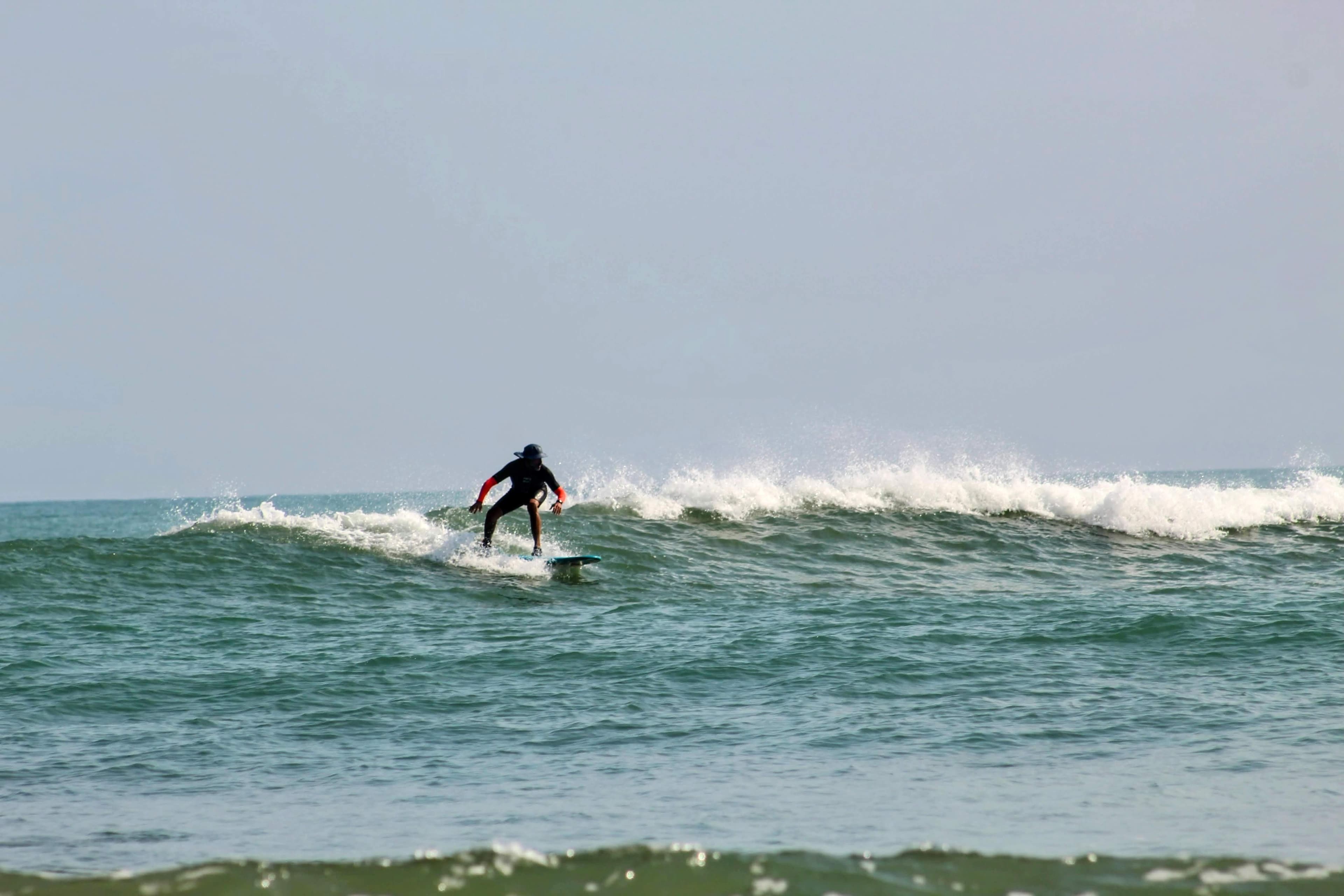
A Barcelona-based lawyer who has run his own practice since 2008, José Manuel works on some of the most consequential questions of our moment — AI governance, corporate AI responsibility, and intellectual property strategy. He's also a retail investor, a guest lecturer in those same fields, and, when his calendar allows it, a regular guest at Outsite locations along the Portuguese coast.
We sat down with him to talk about a career that's taken him from Erasmus in the UK to a master's in Germany, from work in Vienna to a home in Barcelona — and the phrase he kept returning to throughout our conversation: protecting depth.
You've lived and worked in a lot of places — UK, Germany, Austria, Madrid, South Africa, Portugal. Has work always pulled you around?
Different reasons, actually. I did my Erasmus year in the UK. I did my master's in Germany. I worked in Vienna. Madrid was for work, family, life. London was work too. South Africa and Portugal were a bit different — Portugal partly for work, but also because in the last years I've been able to design a life around thoughtful work, movement, and the sea. Since I run my own firm, I have the flexibility to work from anywhere.
When did you start the firm?
In 2008. So 18 years ago. I was born in 1970, so my professional experience now is closer to 30 years.
What does an ideal working day look like for you?
Ideally, my day starts relatively early with movement — surfing, or a quiet moment for mindfulness or meditation. Then breakfast. Afterwards I move into focused work: checking emails, drafting documents, reading, writing, advising. Sometimes preparing a talk.
At the end of the day, even if it's been intense — or especially if it's been intense — I like to end slowly. A walk, good food, good conversation. That's also when I reflect: on markets, ideas, new projects.
How did you first find Outsite?
Honestly, I don't remember exactly. I was already designing my life around movement and focused work. I came across Outsite and it looked like the right architecture for that.
What keeps you coming back?
The community is one part of it. There's a preconception that places like this are full of people in their twenties, and I've met plenty of young people — but I've also met older people, which is one of the things I appreciate. Good conversations across generations.
The other part is harder to put a word on. It's not the same as a hotel. I usually feel a bit like home when I stay. And that matters when your life is structured the way mine is.
Do you go in looking for work connections, or does it tend to be more personal?
Honestly, I'm not actively looking. I'm very fond of good conversations, but I don't go to Outsite to network professionally. When it happens, it's welcome. I've met two entrepreneurs in Cascais who I stayed in touch with. But I'd rather have a meaningful conversation than collect contacts.
Do you have a favourite location?
Pretty much anywhere in Portugal. I'm fond of Ericeira, and Cascais especially — and the new one in Porto.
There's something about Portugal that you can't really separate from the elements. The wind, the ocean, the sun, the light. It's amazing.
Your work sits right at the centre of one of the most consequential conversations happening anywhere right now. How do you read this moment?
I think we're in the middle of a real paradigm shift, and it's forcing deeper questions about responsibility, about what kind of digital future Europe wants to build. The stakes are very high. The companies don't have a clear trajectory yet — they haven't decided what kind of organisations they want to be.
One of the reasons I started my own practice was that I wanted to advise in a way that aligns law with human values and ethics. That's only become more relevant.
And on the European AI landscape specifically?
Mostly the conversation is dominated by the US, yes. Europe can build its own path. It's already happening in some areas. But it requires political will and a much clearer sense of what we want to protect.
There's an exception worth highlighting: ASML, the Dutch company. They're the global leader — close to a monopoly — in lithography machines. That's a clear case of European success and leadership, and I think it's showing the way other European companies could aim to follow.
Digital sovereignty for Europe is crucial, more important than ever. Interoperability and open source can help us get there. The challenges ahead are significant, but we'll find a way.
One last thing. You used a phrase earlier that stayed with me — you said Outsite helps you "protect depth." Can you say more about that?
When your life is structured around movement, the risk is fragmentation. You can lose the centre of it. What I try to do — and what staying at Outsite supports — is to stay centred. To command my own lifestyle. To keep working at depth. To keep my privacy when I need it, and to be in good company when that's what the moment calls for.
Everything else can move. The depth is the part worth protecting.
José Manuel Pérez Marzabal runs an independent legal practice focused on AI governance, corporate AI responsibility, and intellectual property strategy.
X: @jmperezmarzabal
IG: @josemarzabal
This interview was conducted by Rebecca, Outsite’s Head of Marketing.

Coliving spaces, community, and perks designed for remote workers and creatives.
Product
Company
Social


Keep up with location openings,community events, and other news.
Download the Outsite App Now


© 2026 Outsite Co. All rights reserved.